-

Forgiveness Isn’t Trust—It’s Releasing the Burden They Left Behind
•
Forgiveness is often misunderstood. It’s not about trusting again or forgetting what happened—it’s about choosing peace, even if they never apologize. When you’ve been betrayed or emotionally harmed, your nervous system holds onto that pain, replaying it like a loop. This blog explores how forgiveness is a way to free yourself—not to let them…
-
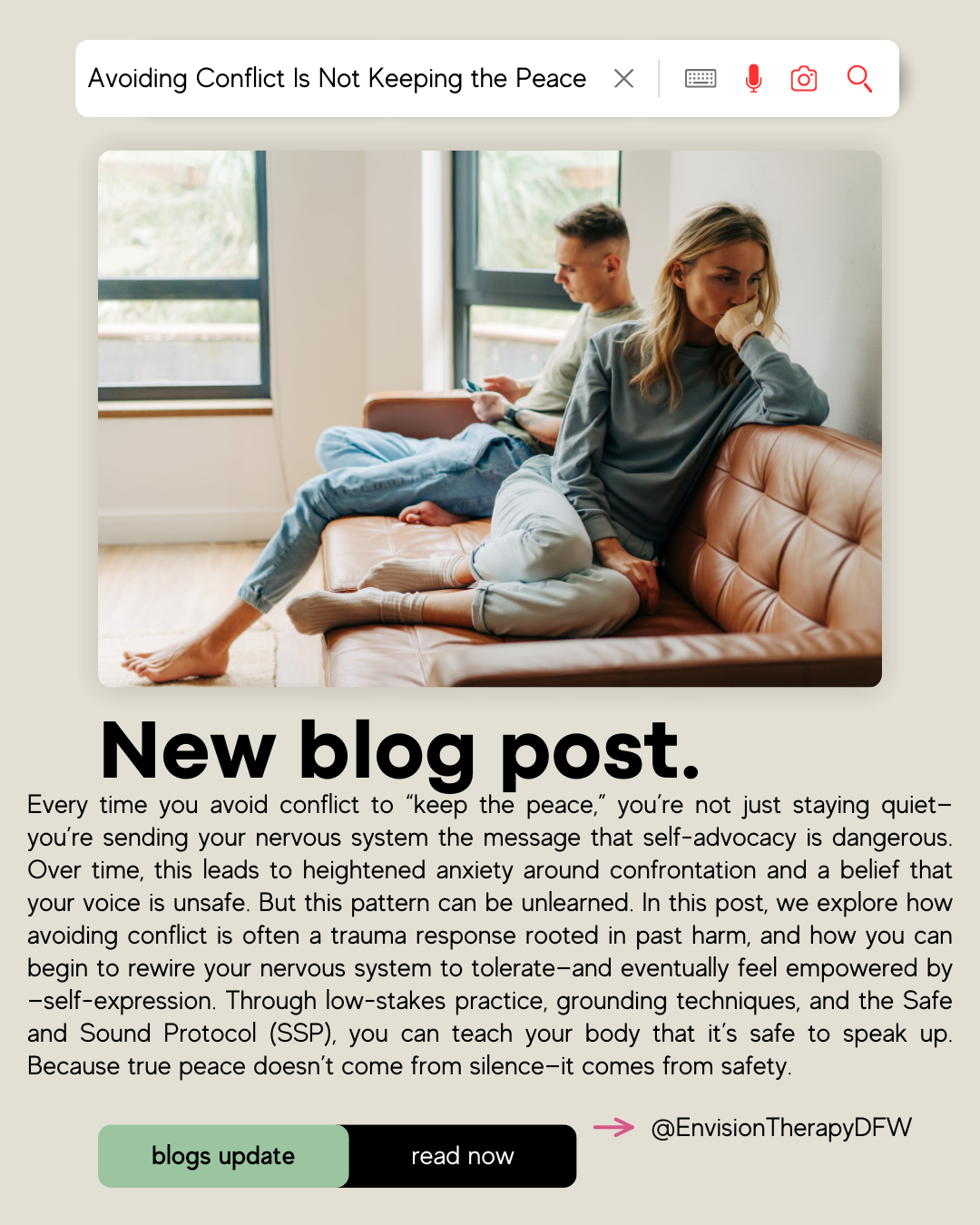
Avoiding Conflict Is Not Keeping the Peace
•
Every time you avoid conflict to “keep the peace,” you’re not just staying quiet—you’re sending your nervous system the message that self-advocacy is dangerous. Over time, this leads to heightened anxiety around confrontation and a belief that your voice is unsafe. But this pattern can be unlearned. In this post, we explore how avoiding…
-
What if the way you protect yourself is a map to your deepest wounds?
•
Not all trauma shows up on the outside. Sometimes, it’s in the way you flinch when someone gets too close, or how you shut down when emotions get real. These are not personality flaws—they’re protective behaviors your nervous system developed to keep you safe. But over time, these same defenses can block the very…
-
Did you Imagine It or Did They Gaslight You?
•
Gaslighting doesn’t just make you question others—it makes you question yourself. If someone has consistently minimized your feelings, denied your memories, or made you feel like your reaction was the problem—not their behavior—you weren’t imagining things. You were being manipulated. In this post, we unpack what gaslighting really looks like, how it fractures your…
-
Some of Your Most Polite Behaviors Are Survival Mechanisms
•
People often assume being polite, agreeable, and conflict-avoidant is a personality trait. But for many, these behaviors aren’t kindness—they’re survival tactics. If you grew up in an environment where disagreeing led to consequences, your brain learned to fawn—to make yourself small, quiet, and easy to be around to avoid harm. But you don’t have…
-
Your Emotional Numbness Isn’t Apathy—It’s Exhaustion
•
If you’ve ever felt emotionally numb—like nothing really reaches you anymore—you’re not broken. You’re just exhausted from feeling too much for too long. Your nervous system has shut down as a survival response, not because you don’t care, but because your brain couldn’t process any more emotional overload. In this post, we’ll explore why…
-
What if resilience isn’t strength, but adaptation?
•
“What doesn’t kill you makes you stronger” is a comforting lie. Trauma doesn’t create strength—it creates survival mechanisms. It teaches you how to live with ghosts, how to function while carrying wounds, and how to endure what should never have been endured. But real strength isn’t about how much you can carry—it’s about learning…
-
ADHD Isn’t a Lack of Focus—It’s an Overflow of It
•
ADHD isn’t a lack of focus—it’s an overwhelming flood of attention that makes prioritization difficult. Your brain takes in everything at once, leading to distraction, cognitive overload, and difficulty shifting between tasks. Healing and managing ADHD isn’t about trying harder—it’s about using tools that work with your brain, like interest-based motivation, body doubling, and…
-
You Didn’t Have Trust Issues—You Had Proof
•
You don’t have trust issues—you have proof. When trust has been broken repeatedly, your nervous system learns to stay guarded. This isn’t paranoia—it’s protection. In this post, we explore why trust issues aren’t a flaw but a survival skill, and how you can rebuild trust in safe environments with the right people. We’ll also…
-
Your Anxiety Isn’t Irrational—It’s a Survival Response
•
Anxiety isn’t a flaw—it’s a survival tool your brain developed in response to past unpredictability. If you feel like your brain is constantly on high alert, it’s because it learned to anticipate danger to keep you safe. But now, that same mechanism might be keeping you stuck in fear. In this post, we’ll explore…